The Home Warranty Scam: Why Your HVAC Coverage Is Designed to Deny Your Claim
You bought the home warranty because it seemed like smart financial protection.
"Complete coverage for major systems and appliances! One low annual fee! Peace of mind!"
Then your AC stops working on a 108-degree July afternoon in Murrieta.
You call the warranty company. You pay your $75-$125 service fee. You wait for help.
And wait.
And wait.
Three days later, a technician finally shows up. Twenty minutes after that, you get the news:
"Sorry, this repair isn't covered. That'll be $1,400."
You're confused.
Isn't that why you've been paying $600 a year for this warranty? The technician shrugs. The warranty company refers you to page 47, subsection D, paragraph 3 of your contract.
Your family is melting. Your AC is still broken. And you're out the service call fee with nothing to show for it.
Welcome to the home warranty game.
And spoiler alert: The house always wins.
After working with hundreds of Temecula Valley homeowners over the past 15 years—many of whom came to us after their home warranty let them down—I've seen this story play out over and over.
It's time someone explained exactly how home warranty companies operate, why they deny so many HVAC claims, and what you can do about it.
How Home Warranty Companies Actually Make Money
Let's start with the business model, because once you understand the economics, everything else makes sense.
Home warranty companies collect your annual premium (usually $400-$700) and your service call fees ($75-$125 per visit). In exchange, they promise to repair or replace covered items when they break down.
Sounds straightforward, right?
Here's the catch:
Home warranty companies are profitable only when they pay out LESS in claims than they collect in premiums.
Think about it.
If you pay $600 a year and they spend $1,500 fixing your AC, they lose money on you. Do that across thousands of customers, and they go out of business.
So their entire business model depends on one thing:
Minimizing claim payouts.
Not providing great service. Not ensuring you're taken care of. Not building long-term customer relationships.
Every dollar they don't spend on your repair is a dollar of profit.
And that creates some very predictable (and frustrating) incentives.

"The fine print that protects the warranty company, not you."
The 6 Ways Home Warranty Companies Deny HVAC Claims
Let me walk you through the most common tactics I've seen here in Murrieta and Temecula.
These aren't conspiracy theories—these are actual experiences from real homeowners. And they're baked into the system.
Let me walk you through the most common tactics I've seen here in Murrieta and Temecula.
These aren't conspiracy theories—these are actual experiences from real homeowners. And they're baked into the system.
1. "Pre-Existing Condition"
This is the #1 claim denial tactic, and it's devastatingly effective.
Here's how it works:
The technician arrives and determines your AC compressor has failed. But instead of approving the repair, the warranty company investigates. They claim the compressor didn't just fail—it was already failing before you bought the warranty or before your current contract period started.
How do they "prove" this?
They point to a lack of maintenance records (even though you've been maintaining it)
They claim the failure pattern suggests long-term neglect
They find some other component that's worn and say, "See? This whole system hasn't been maintained"
Even if you've had the warranty for years and this is your first claim, they'll find a way to argue it was pre-existing.
REAL MURRIETA EXAMPLE:
A homeowner called us after their warranty company denied a compressor claim, saying the system showed "signs of long-term refrigerant loss" (which they classified as pre-existing).
The homeowner had owned the home for 8 years and had been paying for the warranty for 6 of them.
Didn't matter. Claim denied.
2. "Lack of Maintenance"
Home warranty contracts require you to "properly maintain" your HVAC system. Seems reasonable, right?
Except the contract doesn't clearly define what "proper maintenance" means.
And the warranty company gets to decide after the fact whether you maintained it properly.
Common excuses they use:
"We don't see annual maintenance records from a licensed contractor"
"Your air filter was dirty" (even if you just forgot to change it this month)
"The coils show signs of dirt buildup" (which happens to every outdoor unit in our dusty climate)
"You didn't keep receipts from your tune-ups"
Here's the real kicker:
Even if you DID maintain your system, if you can't produce documentation proving it, they'll deny the claim.
And guess what? Most homeowners don't keep detailed service records from every $150 tune-up they've had over the past 5 years.
Translation: They've created a system where they can deny almost any claim by pointing to "lack of maintenance."
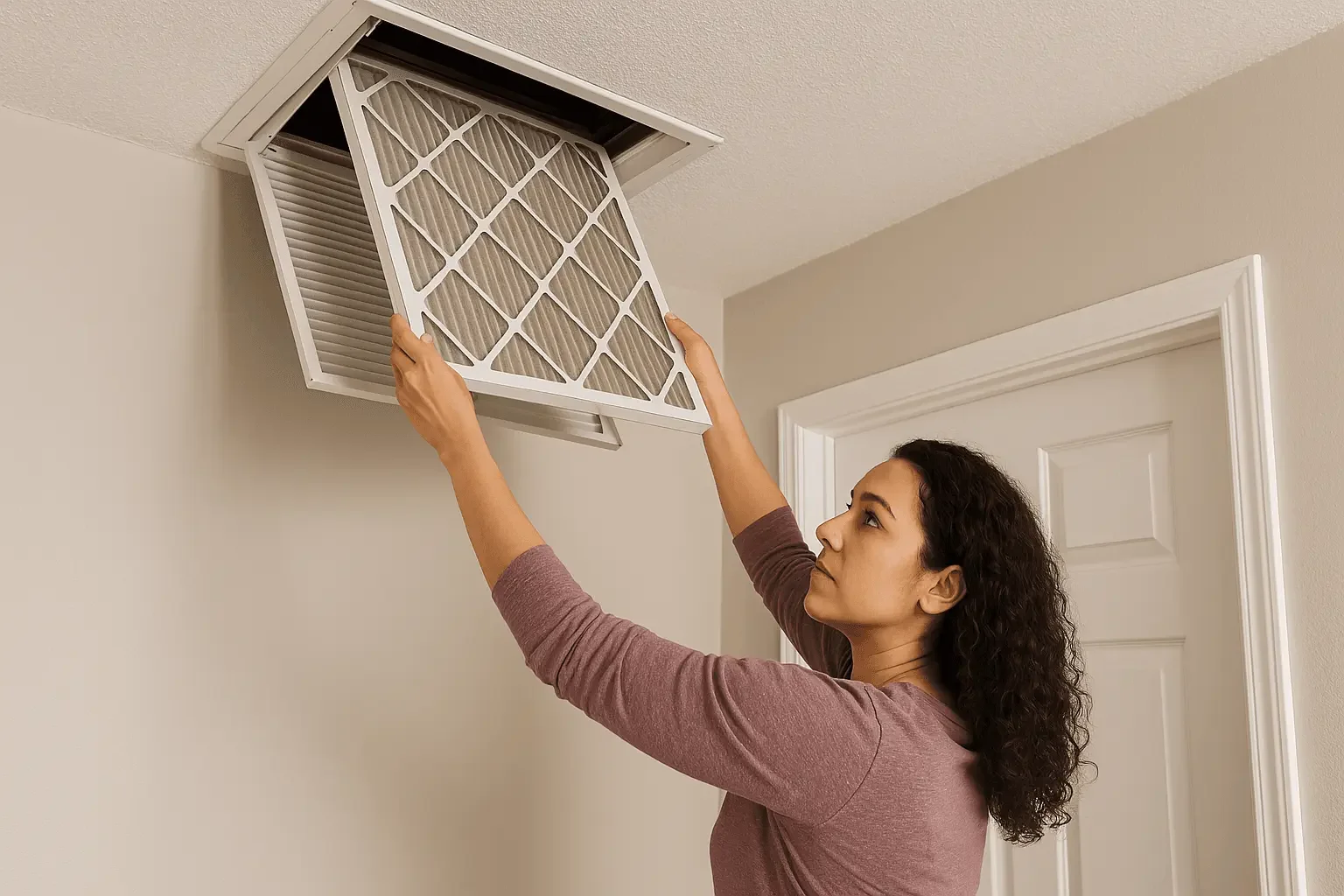
"Any sign of dirt can be used to deny your claim for 'lack of maintenance.'"
3. "We'll Only Cover Part of It"
This one is sneaky.
Your AC isn't working. The technician determines the compressor failed, which caused the hard-start capacitor to blow, which damaged the contactor, which tripped the circuit breaker.
The warranty company agrees to cover... the capacitor. A $45 part.
But the compressor?
Not covered—that was a "separate failure."
The contactor? Also separate.
The labor to replace everything and recharge the system? Definitely not covered.
So you're looking at:
Covered: $45 capacitor
Not covered: $1,800 compressor + $150 contactor + $600 labor + $300 refrigerant
You paid your $100 service fee. The warranty company paid $45.
You're on the hook for the other $2,850.
They technically "covered" your claim. But not in any way that actually helps you.
4. "That's Cosmetic / Environmental Damage"
Home warranties explicitly exclude damage from:
Rust and corrosion
Sediment and scale buildup
Environmental factors
"Acts of God"
In the desert climate of Murrieta and Temecula, guess what happens to outdoor AC units?
They rust. They corrode. Dust and debris get inside.
So when your condenser fan motor fails after years of exposure to 110-degree heat, blowing dust, and sun damage, the warranty company says:
"Sorry, that's environmental damage. Not covered."
Never mind that this is how HVAC equipment fails in our climate.
According to the warranty company, equipment should only fail from "normal wear and tear"—a conveniently vague phrase they get to interpret however they want.
5. "We'll Only Pay the Minimum"
Let's say your claim actually gets approved. Congratulations—you beat the odds!
Here's what happens next:
The warranty company doesn't pay for the actual repair. They pay what THEY think the repair should cost, which is usually:
Bottom-tier parts (the cheapest available, often refurbished or aftermarket)
Minimum labor rates (way below what actual contractors charge)
No consideration for local market rates(they use national averages, not Murrieta pricing)
💰 REAL EXAMPLE:
A warranty company approved a condenser fan motor replacement and authorized $175 for parts and labor.
In reality:
The part alone costs $225
Labor is another $200 minimum
The contractor has two choices:
Eat the loss and do the job anyway (which most won't)
Tell the homeowner they need to pay the difference
Guess which one happens?
So even when your claim is "covered," you're still writing a check for hundreds of dollars to make up the difference.
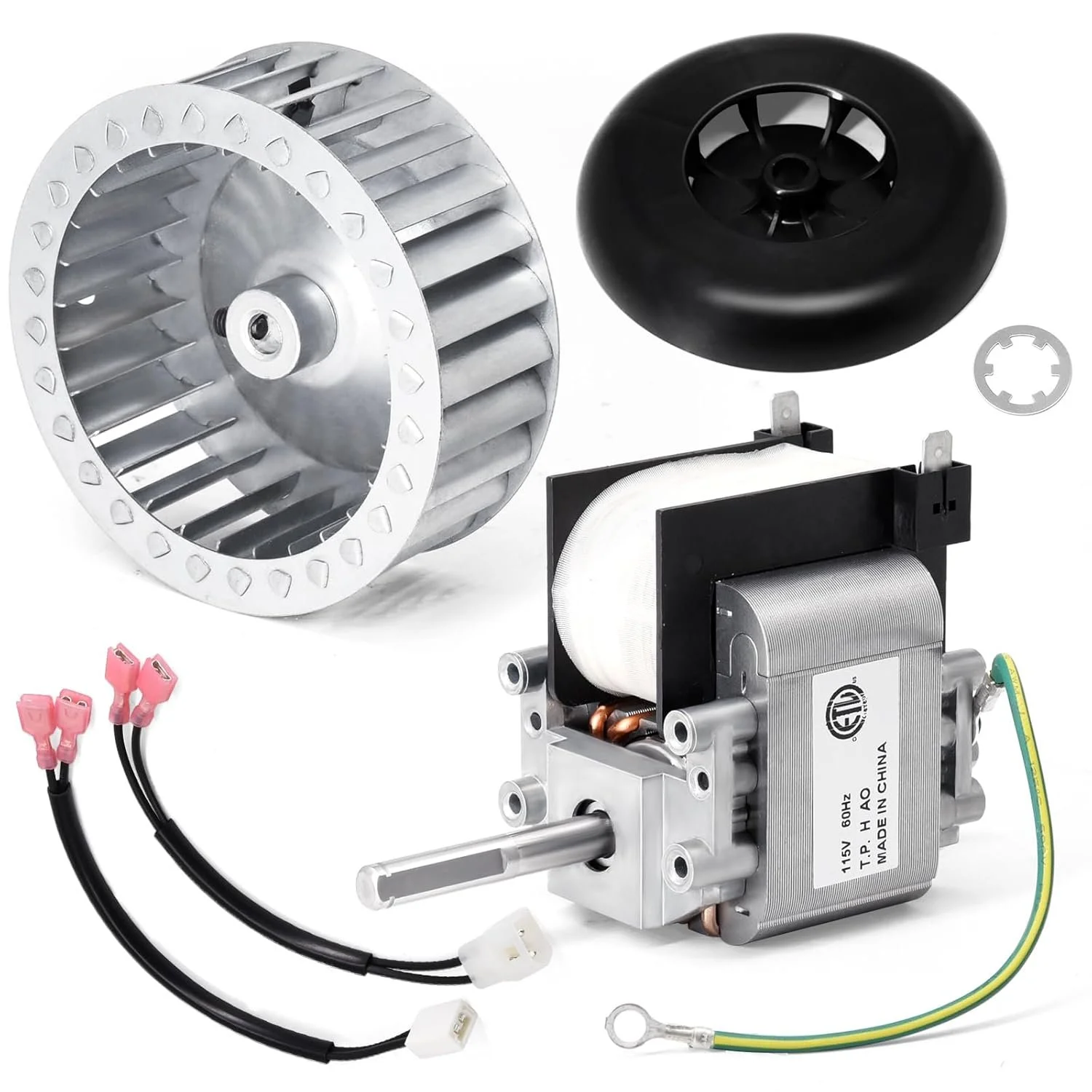
"Warranty companies authorize the cheapest parts available, not quality replacements."
6. "We're Sending Our Contractor"
Here's where it gets really frustrating.
You can't just call your trusted HVAC company and file a claim.
The warranty company assigns you to one of THEIR contracted technicians—usually someone who:
Gets paid rock-bottom rates by the warranty company
Has a financial incentive to find reasons to deny or minimize the claim
May not be the most experienced or highest-quality contractor in the area
Why?
Because the warranty company has negotiated dirt-cheap labor rates with these contractors. And those contractors can only make decent money if they:
Complete calls as fast as possible (speed over quality)
Upsell you on non-covered work
Find reasons to deny claims so the warranty company stays happy and keeps sending them jobs
You don't get to choose who works on your system.
You get whoever is cheapest for the warranty company.
And if you're in a bind and want to use your own contractor? Most warranties won't reimburse you, or they'll reimburse at such low rates it's not worth it.
The Response Time Problem
Even when claims are approved, there's another issue:
Speed.
When your AC dies in July and it's 110 degrees outside, you need help now—not in 3-5 business days.
But home warranty companies don't operate on your timeline. They operate on their call queue.
You submit a claim. They assign a contractor. The contractor fits you in when they can.
⏰ I've seen Murrieta families wait 4-7 days for a warranty contractor to show up during peak summer.
Meanwhile, if you called a regular HVAC company directly, many (including us) can have someone there same-day or next-day.
But you're stuck. You already paid the service fee. You're hoping it'll be covered.
So you wait.
And wait.
While your family sweats.
Why This System Exists (And Why It Won't Change)
Look, I'm not saying home warranty companies are evil.
I'm saying their business model is fundamentally misaligned with your interests.
They profit by denying claims. You benefit when claims are approved.
They profit by paying contractors as little as possible. Contractors need sustainable rates to do quality work.
They profit by delaying service. You need fast response during emergencies.
These incentives can't be reconciled.
It's not a bug in the system—it's a feature.
Home warranty companies spend millions on marketing to homebuyers and real estate agents, promoting peace of mind and comprehensive coverage.
But the fine print, the exclusions, the interpretation of "normal wear and tear"—it's all designed to limit payouts.
And because most homeowners don't read the 40-page contract filled with legal jargon, they don't realize what they're actually buying until it's too late.
A Better Way to Protect Yourself
So what should you do instead of buying a home warranty?
Here's what I recommend to every homeowner in Murrieta and Temecula:
1. Self-Insure with an Emergency Fund
Take the $600 you'd spend on a home warranty and put it in a savings account every year.
Do that for 3-4 years and you've got $2,400+ set aside for HVAC repairs or replacement.
When something breaks, you pay for it directly—but you're not fighting with a warranty company, waiting days for service, or dealing with denied claims.
You're in control.
2. Invest in Preventive Maintenance
Most HVAC breakdowns can be prevented or caught early with proper maintenance.
Instead of paying $600/year for a warranty that might deny your claim, spend $150-$200/year on annual maintenance with a trusted local contractor.
We catch problems before they become emergencies.
A $45 capacitor replaced during a tune-up costs a lot less than an emergency call when it fails at 9 PM on a Saturday.
3. Build a Relationship with a Local HVAC Company
When you have a go-to HVAC company you trust, you're not scrambling during an emergency.
You know who to call. They know your system. They have your service history.
And when you need a repair, you're not dealing with:
Warranty company bureaucracy
Claim denials
Assigned contractors who don't know you or your home
Week-long waits for service
You just call, we come out, and we fix it. Simple.
4. Ask About Financing Options
If you're worried about affording a big repair or replacement, ask about financing.
Many HVAC companies (including us) offer payment plans that let you spread out the cost over 6-24 months.
You get the repair you need, when you need it, without draining your savings.
No claim forms. No denials. No waiting.
When Home Warranties Might Make Sense
I'm not going to tell you home warranties are NEVER worth it.
There are a few scenarios where they might make sense:
You're buying an older home
with appliances and systems you know will need replacement soon, and the warranty is included by the seller
You're risk-averse
and would rather pay a flat annual fee than potentially face a large unexpected expense
You have multiple old systems
(HVAC, water heater, appliances) that are all likely to fail, and the math works out in your favor
But even in these cases, read the contract carefully.
Understand:
What's actually covered (and more importantly, what's not)
What "proper maintenance" means and how you prove it
How claims are processed and how long response times typically are
What you're actually getting for your $500-$700/year
And if you do buy a home warranty, keep impeccable maintenance records.
Take photos. Keep receipts. Document everything.
Because if you ever need to file a claim, you'll need to prove you maintained your system properly—or they'll deny you.
Our Experience with Home Warranty Companies
Full transparency: we've worked with home warranty companies before.
We'd get assigned to a job, show up, diagnose the problem, and then... wait.
Wait for approval. Wait for the warranty company to decide if the claim was valid. Wait for them to authorize parts. Wait for them to argue about labor rates.
Meanwhile, the homeowner is stuck in limbo, not knowing if they'll be covered or if they'll need to pay out of pocket.
It was frustrating for us, and it was even more frustrating for the homeowners.
Eventually, we made a decision:
We'd rather work directly with homeowners who choose us because they trust us, not because we're the cheapest contractor a warranty company could find.
We'd rather charge fair prices for quality work than negotiate with a faceless company that's incentivized to pay us as little as possible.
And we'd rather build long-term relationships with families in Murrieta and Temecula than be one more anonymous contractor in a broken system.
So we stopped taking home warranty work.
It wasn't an easy decision, but it was the right one.
We're not in business to play games with warranty companies. We're in business to take care of homeowners.
What to Do If You Already Have a Home Warranty
If you currently have a home warranty and your HVAC needs service:
Step 1: File the Claim, But Be Prepared
Go ahead and file the claim—you've paid for it, you might as well try.
But be ready for:
Delays
Requests for maintenance documentation
Potential denials
Out-of-pocket costs even if approved
Step 2: Get a Second Opinion
If the warranty contractor says you need expensive work that's "not covered," call a local HVAC company for a second opinion.
Sometimes the diagnosis is accurate. Sometimes it's exaggerated to push you toward non-warranty work.
Step 3: Document Everything
Save every email, text, and piece of paperwork from the warranty company.
If you end up in a dispute, you'll need it.
Step 4: Know When to Walk Away
If your claim is denied or the process is taking forever, it's okay to cut your losses, pay out of pocket, and move on.
Sometimes peace of mind is worth more than $100 you've already spent on the service fee.
The Bottom Line
Home warranties sound great in theory: pay a flat fee, get coverage for expensive repairs, sleep easy at night.
But the reality is very different.
The business model depends on denying claims, minimizing payouts, and keeping you in a system where you have no control over who works on your home or how quickly they respond.
You're not a valued customer. You're a claim to be processed—and ideally, denied.
I've seen too many Murrieta and Temecula families get burned by this system.
Families who paid thousands in premiums over the years, only to be told "sorry, not covered" when they finally needed help.
You deserve better.
You deserve a company that shows up when you call. That does quality work the first time. That doesn't play games with paperwork and exclusions. That treats you like a person, not a claim number.
That's what we do at Righteous Heating & Cooling.
No warranty companies. No claim denials. Just honest service, fair pricing, and a long-term commitment to taking care of your family's comfort.
🔧 Ready to Ditch the Home Warranty Hassle?
If you're tired of dealing with home warranty runarounds and want an HVAC company you can actually count on, we'd love to talk.
Whether you need emergency service, annual maintenance, or just straight answers about your system, we're here to help—no claims, no delays, no games.
📞 Call 951-355-8977
📱 Text "HONEST" to the same number
Righteous Heating & Cooling
Murrieta, CA | Licensed, Bonded, Insured | Lic. #1020132
About Righteous Heating & Cooling
We're a family-owned HVAC company serving Murrieta and Temecula with honest, straightforward service. No gimmicks. No pressure. No games with warranty companies. Just quality work and fair pricing for homeowners who value integrity.
Learn More About Us | Schedule Service | Read More Posts